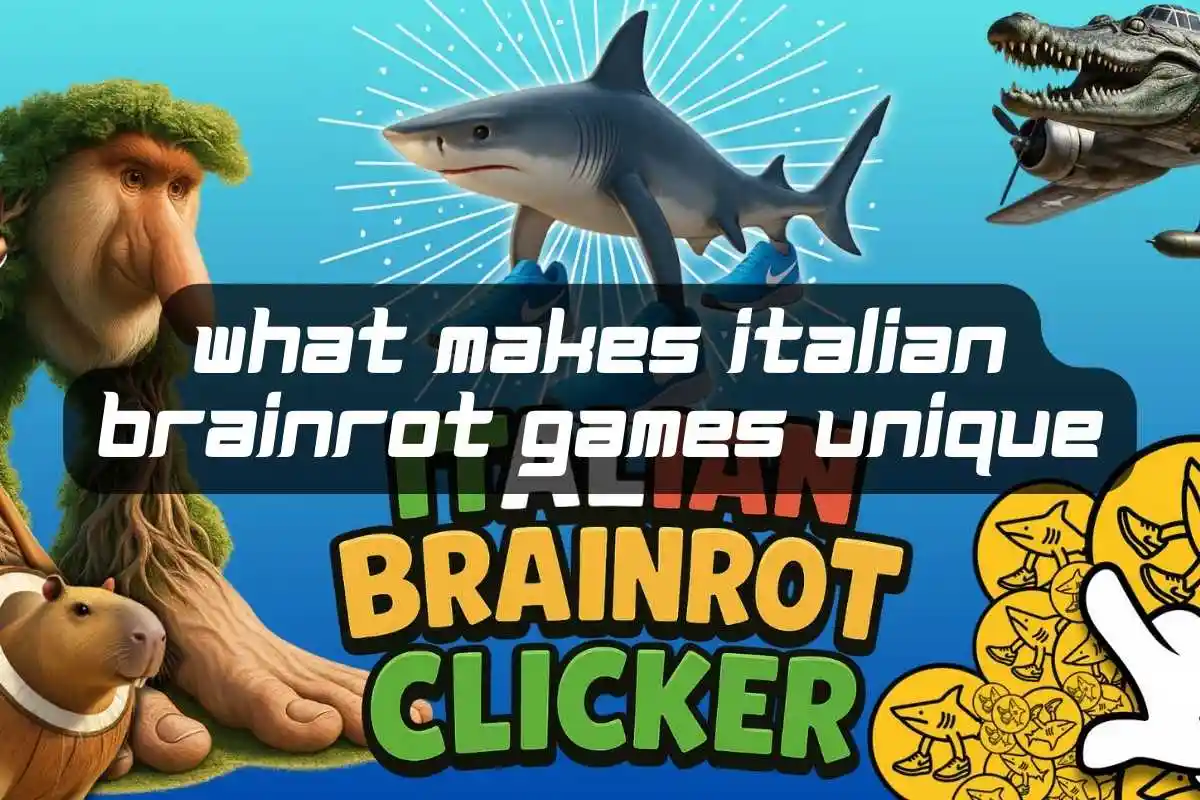
Italian brainrot games represent a bizarre and captivating corner of the .io gaming universe that's been quietly melting minds across the internet. These aren't your typical competitive multiplayer experiences – they're chaotic, absurd, and designed to overload your senses in the most delightfully Italian way possible. Think pasta-themed mayhem meets digital fever dreams, all wrapped up in that distinctly Mediterranean flair for dramatic chaos.
The term "brainrot" might sound negative, but in gaming circles, it's become a badge of honor. These games deliberately embrace sensory overload, rapid-fire mechanics, and visual chaos that somehow creates an addictive, almost hypnotic experience. When you add Italian cultural elements – the passion, the drama, the over-the-top expressions – you get something truly special.
What Makes Italian Brainrot Games Unique
Italian brainrot games stand apart from standard .io titles through their embrace of controlled chaos. While most .io games focus on clean, minimalist design, these titles throw visual restraint out the window. You'll encounter flashing colors, rapid animations, and sound effects that seem designed to trigger some primal response in your gaming brain.
The Italian influence shows up in unexpected ways. Food-themed power-ups aren't just generic items – they're lovingly detailed representations of regional specialties. Character animations often include exaggerated gestures that feel ripped straight from Italian cinema. Even the user interfaces tend to be more expressive, using bold fonts and dramatic color schemes that would make a Ferrari designer proud.
Core Gameplay Elements
Most Italian brainrot .io games share several key characteristics that separate them from their more subdued cousins. Speed is everything – these games move fast, think faster, and punish hesitation. You'll find yourself making split-second decisions while your screen fills with visual noise that somehow makes perfect sense once you're in the zone.
The multiplayer elements tend to be more collaborative-competitive than purely adversarial. Sure, you're trying to win, but the games often reward players who can create the most spectacular chaos rather than just eliminate opponents efficiently. Think of it as performance art with a scoreboard.
Top Italian Brainrot .io Experiences
Pasta Panic Arena
This game epitomizes the Italian brainrot experience. You control a chef character navigating a kitchen that's clearly designed by someone who's never actually cooked but has very strong opinions about how dramatic cooking should look. Ingredients fly across the screen in impossible trajectories, pasta shapes morph and combine in ways that defy physics, and the background music builds to operatic crescendos every time someone successfully completes a dish.
The genius lies in how the visual chaos actually serves the gameplay. Those flying ingredients aren't just eye candy – they're power-ups, obstacles, and strategic elements all rolled into one. Learning to read the chaos becomes a skill unto itself.
Vesuvius Velocity
Built around the concept of volcanic eruptions as competitive sport, this game takes the natural drama of Mount Vesuvius and cranks it up to eleven. Players navigate lava flows that shift and change in real-time, while collecting ancient Roman artifacts that provide temporary abilities.
The brainrot element comes from the sheer amount of information your brain needs to process. Lava patterns shift based on other players' actions, artifacts spawn in seemingly random locations that actually follow complex algorithms, and the entire screen pulses with heat distortion effects that make depth perception a constant challenge.
Mastering the Chaos: Strategy Guide
Embrace the Sensory Overload
Your first instinct will be to focus on individual elements, but that's a rookie mistake. Italian brainrot games reward players who can process the entire screen as a single, living entity. Don't track individual objects – instead, learn to recognize patterns in the chaos. That flashing red zone isn't just visual noise; it's telling you where the next power-up cluster will spawn.
Practice peripheral vision techniques. Set up your monitor so you can see the entire play area without moving your eyes. These games punish tunnel vision harder than a Roman centurion punishes retreating legions.
Audio Cues Are Everything
The seemingly chaotic soundscapes actually contain crucial gameplay information. That operatic high note? It means someone just activated a screen-clearing power-up. The sudden accordion flourish? A new bonus round is about to begin. Learning to distinguish between decorative audio and functional audio cues will give you a massive advantage.
Many top players actually play with their eyes half-closed during particularly intense moments, relying more on audio positioning than visual tracking. The games are designed to support this – every meaningful action has a distinct sound signature.
The Psychology Behind the Madness
Italian brainrot games tap into something deeper than simple entertainment. They create a flow state through controlled overwhelm – your conscious mind gets so busy processing the sensory input that your subconscious takes over gameplay decisions. This leads to those magical moments where you're performing complex maneuvers without consciously planning them.
The Italian cultural elements aren't just window dressing. They're designed to evoke specific emotional responses that enhance the flow state. The passionate music, the dramatic visual flourishes, the over-the-top sound effects – they all work together to bypass your rational mind and get you operating on pure instinct.
Building Your Brainrot Tolerance
Like any intense gaming experience, Italian brainrot games require you to build up tolerance gradually. Start with shorter sessions and gradually increase your playtime as your brain adapts to processing the visual chaos. Most players find their optimal performance window is between 15-30 minutes of continuous play.
Pay attention to your physical responses. These games can be genuinely exhausting in ways that traditional .io games aren't. Stay hydrated, take breaks, and don't push through fatigue – tired brains can't handle the sensory load effectively.
The beauty of Italian brainrot games lies in their ability to create genuine surprise and delight in an increasingly predictable gaming landscape. They remind us that games can be art, chaos can be beautiful, and sometimes the best way forward is to stop thinking and start feeling. Whether you're a seasoned .io veteran looking for something completely different or a newcomer ready to dive into the deep end, these games offer an experience you won't find anywhere else in the gaming world.